
A video of a humanoid machine moving through a BMW factory in South Carolina and picking up sheet metal components with the kind of casual precision that makes you double-check what you’re watching has been making the rounds in robotics circles. No dramatic tunes. There is no voiceover. Just a robot performing a task that, until recently, required years of training and two human hands. The clip is brief. In a subtle way, it’s also among the more important things you can watch at the moment.
The robot from Figure AI finished a multi-month deployment at that plant, helping to produce more than 30,000 cars. Similar experiments are being conducted by Tesla in its own Gigafactories. This year at China’s Spring Festival Gala, Unitree’s machines displayed kung fu choreography, vaulting, sparring, and landing with eerie grace. Most people outside the industry are unaware of how quickly all of this is happening. These robots were stumbling through lab demonstrations a year ago. Some of them are working shifts today.
It is necessary to step back from the hype in both directions in order to comprehend what this truly means. The optimists will claim that robots will liberate humanity from labor-intensive tasks like hazardous mines, hazardous cleanup sites, and overnight warehouse shifts that cause bodies to deteriorate by forty. That part is most likely true, or at least conceivable. Engineers refer to them as “3D” jobs because they are hazardous, filthy, and boring. It seems like a clear victory if a machine can perform deep-sea extraction and high-voltage repairs instead of a human. It’s difficult to disagree.
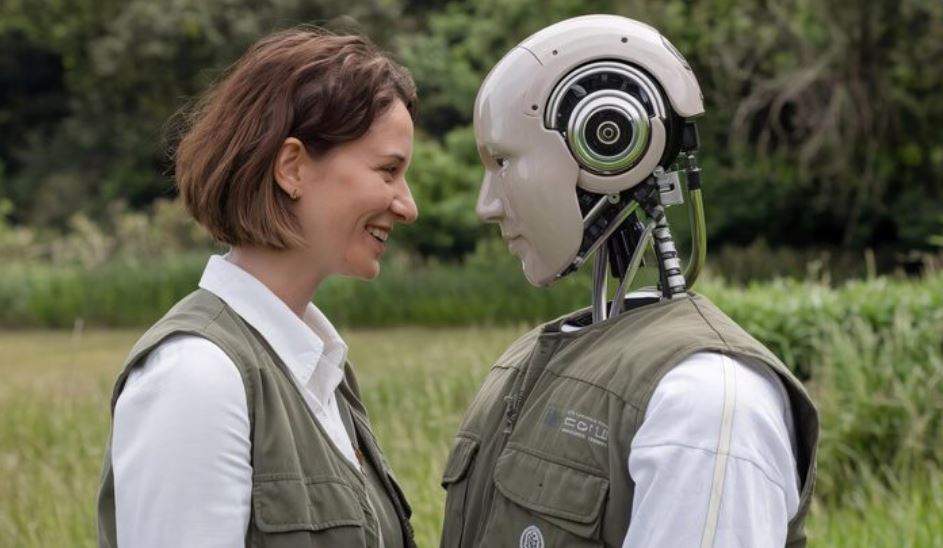
Everything that lies beneath that surface is the more difficult topic of discussion. Humanoid care assistants are already being considered by South Korea and Japan for their aging populations, not because they are the best option but rather because there aren’t enough young workers to cover the shortfall. There’s something worthwhile to sit with there. Even though the practical advantages are genuine, it is not exactly the future anyone envisioned: a machine that has been programmed to appear warm could alleviate loneliness in old age.
In terms of the economy, the situation is actually conflicting. Prices for food, housing, and other necessities could drastically decrease if robots could produce goods at a fraction of the current labor costs. This is the abundance argument, and it has some merit. However, before any of those advantages become widely apparent, millions of people—including drivers, warehouse workers, and assembly line workers—lose their jobs along the way.
Technology disruption eventually produces new work, according to history. It does not imply that the shift is easy or proceeds at a pace that governments are normally able to manage.
Additionally, there is the geopolitical aspect, which seldom receives the attention it merits in coverage aimed at consumers. It is hard to overestimate the economic and strategic advantage that will belong to whoever controls the large-scale production of humanoid robots. With thousands of well-coordinated robots operating in dark factories without any human workers on the floor and a 20% cost reduction at Chang’an Automobile’s Chongqing facility, China is rapidly advancing.
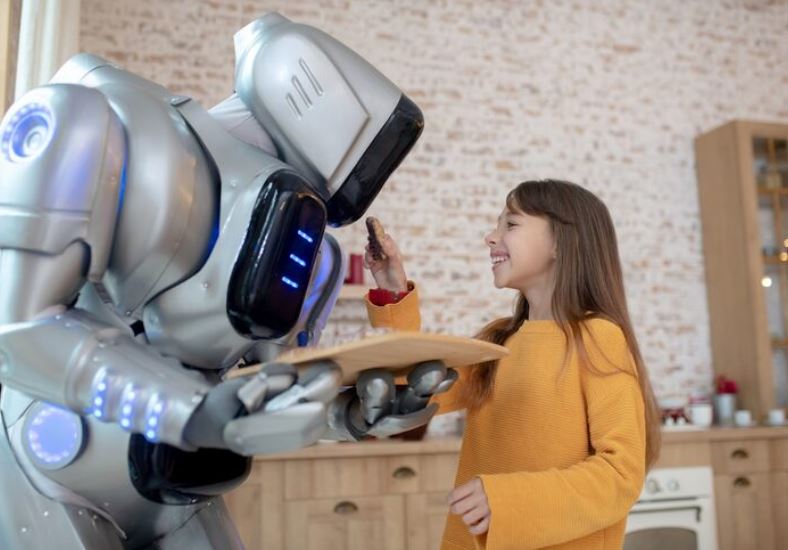
Competition comes from the US, South Korea, Japan, and some regions of Europe. However, this is more than just an industrial race. Eventually, military deployment of adaptable androids will be possible, adding a level of competition that goes far beyond factory economics.
The smaller, more intimate issue of day-to-day living is often overlooked in the larger policy debates. Something fundamental changes when you can no longer tell if the person sitting next to you on a train is a human.
Researchers working on artificial skin, micro-actuators, and AI trained to mimic human hesitation patterns suggest that threshold is not as far off as it sounds.
Not in a philosophical sense that is abstract. Practically speaking, on a Tuesday afternoon. Trust functions differently. It becomes more difficult to find authenticity. Human relationships, which are already complex, are contrasted with companions who are patient, available, and never fatigued.
This comparison might lead to something truly harmful, such as a gradual retreat from the messiness of genuine connection in favor of the neat dependability of a machine that has been engineered to appear to understand you. Right now, that isn’t science fiction. Considering what we already know about how people use technology to avoid discomfort, this behavioral pattern is fairly predictable.
None of which implies that slowing down or resisting is the solution. In any case, that is probably not feasible. It does, however, mean that the most important question to ask at this time is not whether humanoid robots will alter humanity—they will—but rather whether regulations, safety precautions, and moral frameworks will be developed quickly enough to be significant.
Switches should be killed. Robots cannot pass for humans without disclosure if there are clear identification requirements. Tax systems on wealth produced by robots that compensate workers who are displaced during the shift. These concepts are not radical. These are fundamental questions of governance that are long overdue.
There is not a single announcement that ushers in the robot era. Like most major shifts, it comes gradually at first, then all of a sudden, and mostly in unexpected places. A South Carolina factory floor. A Tokyo care facility. China’s Spring Festival stage. The machines are there already. What we do with that—who gains, who is shielded, and what we choose to hang onto—remains genuinely up for debate. That may be the only truthful thing to say about it.
