
This summer, there was a quiet incident at Tesla’s Fremont plant. Two of the most recognizable electric cars of the previous ten years, the Model S and Model X, were produced on an assembly line that went dark. Then it awakened once more, creating something quite different this time.
Using the available floor space, Tesla has started early production of its Optimus Gen 3 humanoid robot, which Elon Musk describes as a “slow, careful ramp toward a machine that he believes will eventually be the most valuable product any company has ever made.” That’s not a lighthearted assertion. Musk has referred to Optimus as the “biggest product ever” multiple times, and he means it on a civilizational level.
However, it takes some careful navigation to compare the current state of affairs at Fremont with Musk’s long-term descriptions.
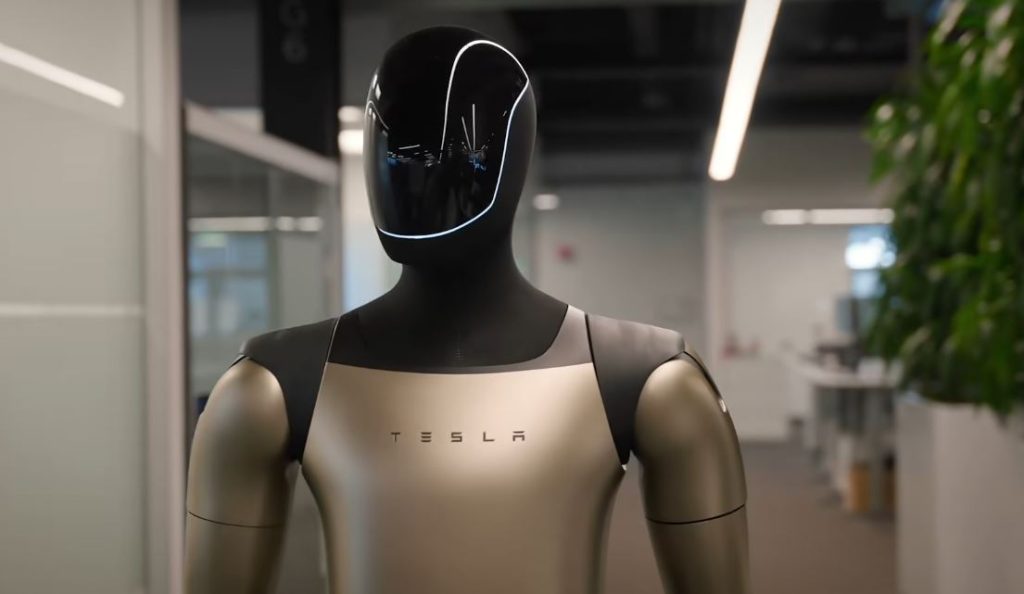
As of mid-2026, production is truly in its early stages. According to reports from people monitoring the supply chain, the trial line is putting together a few dozen units every day while operating in continuous three-shift rotations using a combination of manual and semi-automated procedures. Depending on how you define yield, assembly yield, which is currently at about 50%, can be either a fair place to start for something this complicated or a figure that indicates how much work remains. Change orders for engineering are common. It is common practice to pause briefly for line adjustments. Before it turns into a ramp, it looks like this.
Musk has been deliberately measured when it comes to expectations. Investors have been cautioned by him that early production will be “agonizingly slow” and that many Optimus components’ supply chains are essentially being created from the ground up. The types of custom actuators, tactile sensors, and micro-motors that these robots need are not currently available. The timeline for high-volume output continues to point toward 2027 rather than the present, which is part of what makes this truly difficult.
The Gen 3 differs from earlier iterations primarily in its internal components. In an effort to mimic human dexterity in a machine that still needs to reliably pick up a battery cell, place it precisely, and repeat that thousands of times a shift, the hands have been redesigned with 22 degrees of freedom and about 50 actuators.
These movements’ AI is based on Tesla’s Full Self-Driving neural networks, which is a real advantage because Tesla has years of real-world data training systems to interpret visual inputs and make instantaneous decisions. Additionally, higher-level reasoning and voice interaction are integrated with Grok-based intelligence.
A complete public disclosure of the Gen 3 hardware has been purposefully delayed by Tesla. According to Musk, the company does not want rivals to reverse-engineer the design before production has advanced. Given how crowded the humanoid space has become (Figure AI, Agility Robotics, Unitree, UBTech), it’s understandable to be concerned, but it also means that the public version of Optimus Gen 3 is still largely theoretical. Instead of a proper product showcase, what we know comes from supply chain reports, factory photos, and earnings call commentary.
There will be no sales of the first units off the Fremont line. They will work on battery construction projects at Tesla’s own facilities and produce the real-world training data that helps the AI models get better. This internal deployment has been described by Musk as a sort of academy, where robots practice, make mistakes, learn from them, and eventually improve. Before commercial deployment becomes feasible, 10,000 to 30,000 units are anticipated to undergo this process.
At this point, the pricing picture is still hazy. Musk’s long-term goal for mass production is $20,000 to $30,000 per unit. That’s an ambitious figure that depends on supply chains developing and manufacturing productivity greatly increasing. Early models were significantly more expensive. There is a real difference between the current state of the economy and Musk’s projected future state; this kind of difference has previously caused ambitious hardware projects to falter.
The research community is genuinely skeptical that any of this will be delivered by the company’s projected timeframe. Humanoids, according to Guy Hoffman, a professor at Cornell who studies human-robot cooperation, are a “fantasy product” and autonomous cars, which took roughly 20 years to reach real-world deployment, are a far simpler engineering challenge. Whether the AI driving Optimus can manage the chaotic unpredictability of a real factory floor at the speed and dependability that would make it economically useful is still up for debate.
With a second line scheduled for Giga Texas, and long-term capacity targets in the millions of units per year, Tesla is working toward high-volume commercial production in 2027. It’s really difficult to predict whether that schedule will hold. The robots are currently assembling a few dozen at a time on the former Model S line in Fremont, slowly, methodically, and with much to prove.
