
The data presents an odd narrative. On August 19, 2026, Unitree Robotics, which is formally listed on the Shanghai Stock Exchange as Yushu Technology Co., Ltd., made its debut. The company’s shares ended the first day up more than 460%, closing at 845 yuan after being priced at just 150.80 yuan. Such an opening is the kind that makes headlines in three different countries and is widely shared in group chats related to finance. The company’s market value had increased by almost $20 billion by the next Wednesday. Then, rather quickly, the hype and reality started talking to each other.
Shares had dropped by almost 53% from that initial peak by early September. The current 52-week low is 404.03 yuan, which is nearly exactly where the stock was trading during the most recent full session on October 15. From the 1,100 yuan peak that many investors seemed to be pricing in, that is a long way. We seem to be witnessing a market reassessing a figure it hurried to assign in a single afternoon rather than a company in crisis.
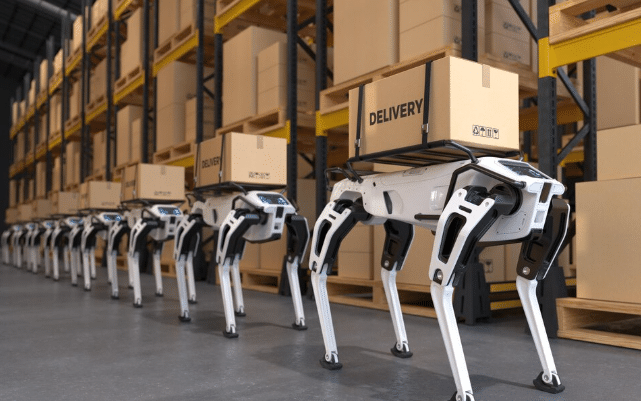
Knowing what Unitree actually does is helpful. The company was established in 2016 in Hangzhou, which is home to Alibaba and is located in the heart of one of China’s most carefully cultivated tech clusters. It produces robots. Not just the industrial weapons that most people envision. Robotic canines.
Machines that resemble humans. Joint motors and sensors are used to make mechanical bodies move more like living things than like machines. In 2024, the $13,500 G1 humanoid went on sale. The starting price of the company’s robot dogs is $2,700, which is significantly less than the approximately $70,000 that Boston Dynamics charges for its rival Spot model. It’s difficult to ignore that gap.
Unitree has figured out how to produce competent machines at a lower cost. These machines aren’t always exactly the same as their American competitors, but they’re close enough that the price difference becomes the story. Researchers observe that the two businesses cater to somewhat different markets and that some of the robot dogs aren’t exact equivalents. However, nuance tends to struggle for airtime when comparing $2,700 to $70,000.
Unusually for a company this early in its trajectory, the company turned a profit last year after shipping over 5,500 humanoid robots. In 2025, the net profit was 278 million yuan. Revenue increased 39% year over year to 729.4 million yuan in the second quarter of 2026. These are not indicators of a failing business. These are the figures of a business whose valuation surpassed its own in just one Tuesday afternoon.
The larger picture is important. With the US and China viewing the industry as a test bed for technological and economic leadership, humanoid robots have become something of a geopolitical obsession. The Optimus is being built by Tesla. Amazon is making investments. BYD is a part of this. Regional governments have invested heavily in robotics clusters like the one in Hangzhou, and Beijing has officially designated robotics as a strategic national priority.
Unitree works in that setting, both benefiting from it and bearing the burden of its expectations. This week, the company’s machines participated in the 2026 World Humanoid Robot Games in Beijing. Earlier this year, Unitree’s G1 robots displayed martial arts skills at China’s Spring Festival Gala, which researchers said was unprecedented. It was described as “a rise of an industry” by one robotics researcher. Investors don’t ignore such a moment, and they probably shouldn’t.
However, it’s important to be truthful about the current situation. The stock is currently trading close to its 52-week low. A substantial amount of future growth is still priced into the shares, as indicated by the P/E ratio of roughly 253. Since the post-IPO frenzy, the average daily trading volume has significantly decreased. Investors appear to have enough faith in the business to not completely abandon it, but not enough to drive the price back to its peak. That contains an unresolved tension that is probably going to remain unresolved for some time.
It seems most accurate to state that Unitree is a legitimate business that produces legitimate goods that consumers, manufacturers, and governments purchase. Most likely, the excitement surrounding the IPO wasn’t warranted. It’s also unlikely that the subsequent 53% collapse was totally justified.
The company’s ability to turn its technological advantage into long-term revenue growth and whether humanoid robots prove to be as commercially significant over the next three years as their most ardent supporters are demanding will determine where the stock ultimately settles. They might. It’s also possible that the adoption rate will fall short of the more optimistic estimates.
A business that began in a workshop in Hangzhou ten years ago will eventually need to continue gaining the attention of the world. The robots are delivering so far. Whether the stock will follow is the question.
FAQs
1. Where is Unitree Robotics stock listed?
It trades on Shanghai’s STAR Market under ticker 688836.
2. How much did Unitree shares rise on their first day?
Shares surged over 460%, closing at 845 yuan on debut day.
3. How far has the stock fallen from its peak?
It has dropped roughly 53% from its post-IPO high.
4. Is Unitree Robotics actually a profitable company?
Yes — it posted a net profit of 278 million yuan in 2025.
5. How does Unitree’s pricing compare to US rivals?
Its robot dogs start at $2,700 versus Boston Dynamics’ $70,000 Spot.
