

This morning, Apple’s new CEO John Ternus led the audience through the standard choreography of the iPhone 18 Pro updates, AirPods 5, and Apple Watch Series 12 inside the Steve Jobs Theater in Cupertino. Then, as though recalling something, he said, “Actually, there is one more thing.” The phrase was purposefully borrowed. The iPhone Duo, Apple’s first foldable phone and possibly the biggest update to the iPhone since its 2007 launch, came next.
Like a book, the Duo folds. When closed, it measures 5.4 inches, making it small and portable, much like phones that people already carry. When you open it, a 7.6-inch internal display that is 80% bigger than the screen of the iPhone 18 Pro appears. According to Apple, the crease is almost undetectable, a claim made by all foldable manufacturers that very few have been able to substantiate. Most people won’t find out if Apple succeeded until the phone goes on sale on October 23. Preorders begin on October 16.
It costs $1,999. Even among those who anticipate Apple charging a premium, that figure carried some weight in the room. Since Samsung has been selling foldables in that range for a few years, Apple is more about entering a market it has been observing from the sidelines than setting a new ceiling.

The question is whether Apple’s entry will change that market in the same way that the 2007 release of the iPhone changed the smartphone market. It is feasible. It’s also possible that the Duo will continue to be a niche product for a few years before its price drops and it becomes widely used.
On a spec sheet, a few details stand out as truly intriguing rather than merely impressive. The Apple Pencil, which Apple had previously only allowed for the iPad, is supported by the Duo, making it the first iPhone to do so. With split-screen multitasking, users can open two windows of the same website side by side for tasks like comparison shopping or run two different apps concurrently on the large display.
When not in use, the inner FaceTime camera remains concealed beneath the display surface, maintaining the uninterrupted screen. These are actual use cases that give the large format a sense of purpose rather than just being roomy; they are not exactly gimmicks.
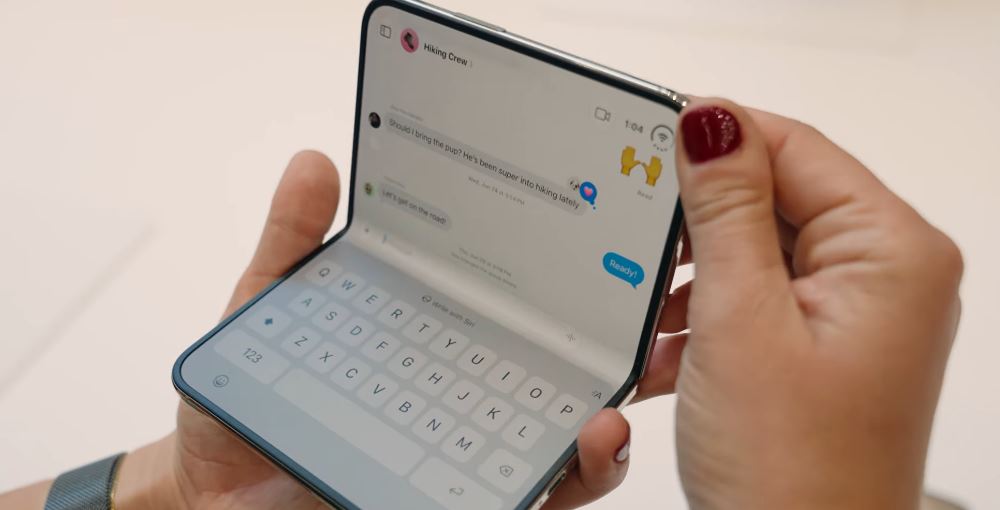
The A20 Pro chip found inside is significantly faster than the A19 Pro found in the other iPhone 18 models. For the type of intense multitasking and high-frame-rate gaming that a 7.6-inch screen encourages, the 7-core GPU’s 40% speed boost is significant.
iOS 27 has been redesigned to accommodate the dual-display format; when the phone is open, controls such as Wi-Fi settings move to the side and dock vertically, keeping the large canvas uncluttered. It has a polished grade-5 titanium frame and is available in two colors: star white and nite sky.
Watching all of this happen gives me the impression that Apple waited on purpose. While Apple improved the hinge technology, solved the crease issue, and developed an operating system that makes good use of the format rather than extending a phone OS across a larger screen, Samsung, Google, and Motorola have been developing foldable muscle for years. Although the hands-on impressions from Cupertino this morning were encouraging rather than definitive, it is still genuinely unclear whether that patience produced a better product than anything currently on the market.
There is no doubt that Ternus made this his first remarks as CEO. It’s not safe to start with the Duo. It will not be shipped to the majority of the world until late October; it is pricey, and it is a new hardware category for Apple. That’s either pressure or confidence, most likely a combination of the two. In any case, explaining the iPhone at a carrier store has become much more difficult.
